Nursery textiles · A practical guide
What Organic Crib Bedding Certifications Can—and Cannot—Tell You
A certification can make a textile’s story easier to verify. It cannot make every decision for you. When shopping for organic crib bedding, read the label as one useful piece of evidence—then check the fabric, fit, construction, care instructions, and the way the item will actually be used.
Published November 27, 2026
Baby bedding arrives with a vocabulary designed to reassure: organic, natural, non-toxic, breathable, gentle. Some of those words refer to a material. Others describe a particular quality or imply a broader standard. A certification, when it applies to the product in question, can offer a more structured answer: an independent system has checked specified parts of the product or its production against defined requirements.
That is valuable. It is also narrower than many shoppers assume. A mark on a textile does not automatically certify the mattress, prove that a sheet fits a particular crib, guarantee a baby will sleep safely, or promise that every environmental and health concern has been addressed. The meaning depends on the certifier, the standard, the product scope, and the claim being made.
For caregivers comparing nursery textiles, the task is not to distrust certifications. It is to interpret them accurately. A useful label answers a particular question. The rest of the questions—about dimensions, fabric feel, washing, and safe use—still belong on the checklist.
What “organic” means on a bedding label
Organic is principally a claim about how agricultural fibers are grown and handled under a defined standard. In cotton bedding, it typically points to cotton produced according to agricultural requirements that restrict or prohibit specified synthetic inputs and set rules for practices such as soil management. It does not, by itself, describe how soft the finished fabric feels, how tightly it is woven, or how well it will fit a mattress.
There is a second distinction worth keeping in view: fiber content and finished-product certification are not interchangeable. A material may be described as organic cotton because the fiber is sourced as organic. A finished textile certification may assess additional stages or criteria, depending on the program and the precise claim. To understand what a label covers, look for the standard’s name and the language attached to it rather than relying on the word “organic” alone.
This is where GOTS—short for the Global Organic Textile Standard—often enters the conversation. GOTS is a textile-processing standard for organic fibers. Its requirements address more than the farm-grown fiber: the standard includes criteria for processing and manufacturing, as well as environmental and social considerations within its scope. The exact requirements and permitted claims are set by the standard and can change, so a brief product description is not a substitute for the current standard documentation.
In practice, a credible GOTS claim should be specific enough to identify the standard and the product or business covered. The presence of the word “GOTS” in general marketing copy does not necessarily establish that the specific item in a shopping basket is certified. When details are unclear, ask the retailer or manufacturer for the product’s certification information and verify that the answer refers to the actual item—not simply to a brand, supplier, or other product in the range.
What a certification can tell you
Depending on the program and claim, certification can provide evidence that certain requirements have been assessed by an independent organization. For organic crib bedding, that may help shoppers understand the fiber’s organic status, how textile processing is managed, or whether specified chemical, environmental, or workplace criteria apply. It can turn a broad promise into a claim tied to a published set of rules.
Certification can also support traceability. Textile production may involve multiple stages and locations, from growing fiber to spinning yarn, weaving fabric, finishing it, and making the final item. Standards that require certified businesses and documentation across relevant steps can help account for a product’s path through those stages. How much of that chain is covered depends on the standard, certification scope, and the claim being used.
That is a more concrete proposition than an unqualified phrase such as “eco-friendly.” But it still has boundaries. A certification is not necessarily an assessment of every component, supplier, process, or effect associated with an item. Nor does a seal on one product automatically extend to everything sold by the same company.
Think of the label as a map with a marked area, not a satellite view of the entire textile industry. It can show where particular rules apply. It cannot tell you what lies beyond the boundary unless another standard or source addresses it.
What a certification cannot promise
A certification does not guarantee that a product is entirely free of every chemical, allergen, or substance a caregiver may wish to avoid. Standards set defined rules and limits; no certification should be casually interpreted as proof of an absolute such as “zero chemicals.” The responsible question is not whether a label sounds reassuring, but which substances or processes the standard addresses and under what conditions.
It cannot promise that a particular fabric will suit every child’s skin, feel comfortable in every room, or perform identically after years of laundering. Fibers, weave, finishing, garment construction, water hardness, detergent, and washing habits all influence how a textile feels and lasts. Organic status is not a substitute for examining those practical qualities.
Nor is certification a safety rating for an entire sleep setup. A certified crib sheet does not certify the mattress beneath it, the crib itself, or the way the sleep space is arranged. It does not establish that a loose blanket, quilt, pillow, or stuffed item is appropriate for an infant’s sleep environment. For safe-sleep guidance, follow current recommendations from qualified health and public-health authorities; textile claims are a separate matter.
Finally, a certification does not necessarily settle broader questions about climate impact, water use, durability, transport, or end-of-life disposal. A standard may address some environmental practices while leaving others outside its scope. If those issues matter to you, look for specific, documented information rather than treating one mark as a universal sustainability score.
Read the product, not just the badge
On a shopping page, the badge may be the most visible detail. For a crib sheet, however, dimensions are among the first facts to check. Confirm that the sheet is designed for the mattress size you have and compare the listed dimensions with the mattress manufacturer’s specifications. A fabric described as organic is not useful if the fitted sheet is too small, too large, or otherwise incompatible.
Construction matters, too. A fitted sheet should be made for a crib mattress, with its shape and fitted edges clearly described. Check the stated depth where available, and follow the manufacturer’s directions for fitting and use. The goal is a neat, secure fit without loose or excess fabric. If you cannot confirm compatibility, ask the seller before buying rather than assuming that products described as “crib size” are identical.
Then look at the fiber and fabric. Cotton is not one texture. A smooth, lightweight woven cotton sheet will feel different from brushed flannel, which has a raised surface created through finishing. Flannel may feel warmer and softer against the skin in a cool room; it may be less appealing in a warmer setting. The word organic speaks to a standard for the fiber or textile, not to a particular weight, weave, warmth level, or sensory experience.
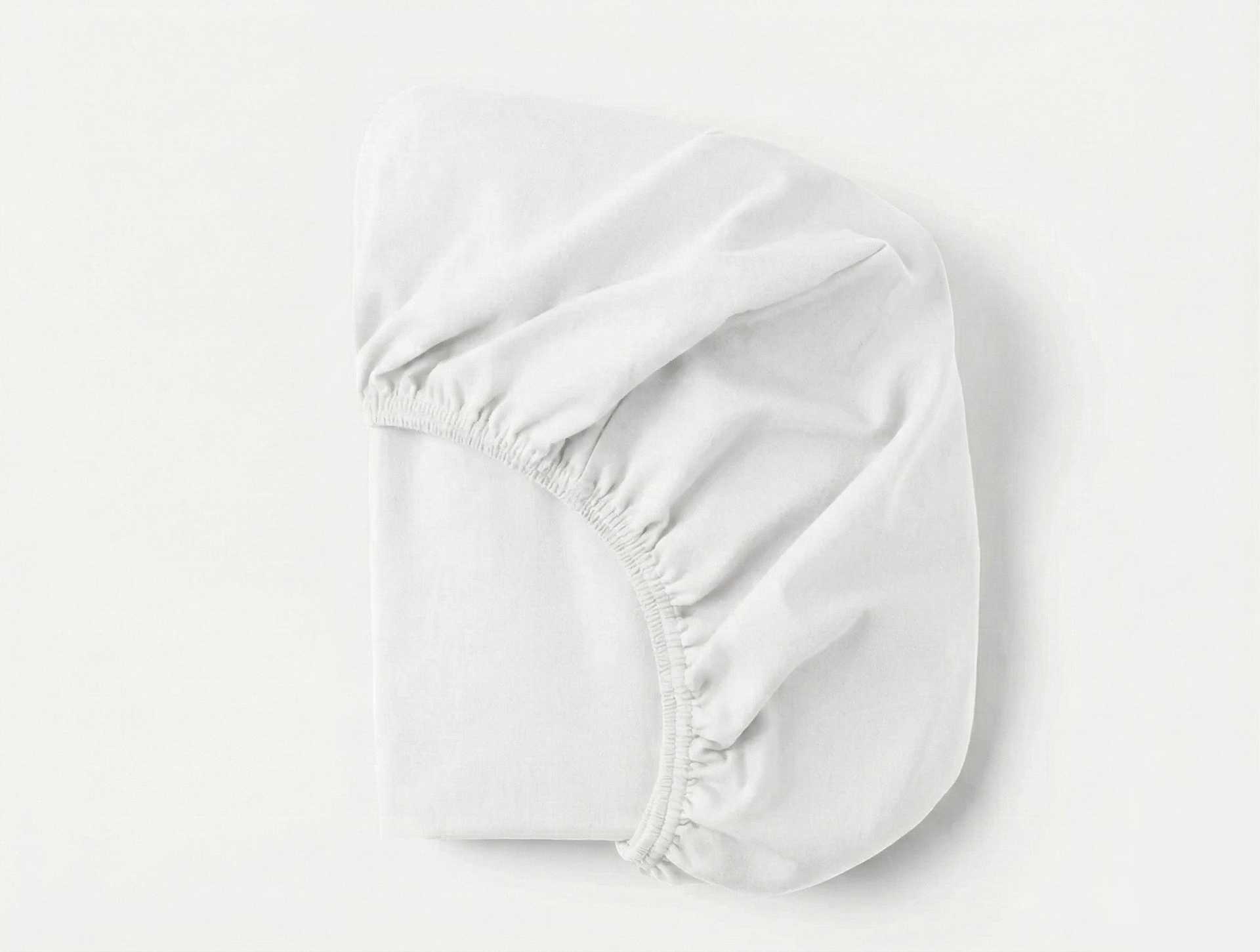
Product descriptions can illustrate these distinctions. The Cloud Brushed™ Organic Flannel Crib Sheet, for example, is described as 100% organic cotton with a brushed-flannel construction and dimensions of 28 by 52 by 8 inches. Its listing states that it is GOTS certified and gives care instructions: machine wash cold on a gentle cycle with like colors, tumble dry low, and remove promptly. Those details answer different questions: the certification is a standards claim; the fiber and finish describe the textile; the dimensions help shoppers assess fit; and the care guidance speaks to routine use. None should be mistaken for the others.
The certification details worth checking
When a label names a standard, try to establish whether the claim applies to the finished product you are considering. Certifications can apply to a business, a facility, a material, a production stage, or a particular item, depending on the program and wording. If the product page says only that a company “uses certified materials,” that may be different from a clear statement that the finished textile is certified.
- Name of the standard: Is the certifier or standard clearly identified, rather than replaced with a vague phrase such as “tested” or “eco-friendly”?
- Scope of the claim: Does the information say whether the claim covers the finished item, its fiber, a production stage, or another part of the supply chain?
- Product connection: Can you tell that the certification applies to this specific sheet or fabric, not merely to the brand in general?
- Supporting information: Is there a certification reference, license information, or a way to confirm the claim with the seller or certifier?
- Plain-language explanation: Does the retailer explain what the mark covers without promising more than the standard supports?
For an unfamiliar mark, visit the certifier’s own website and read its description of the standard. The certifier is the primary source for what its rules require. Retailer copy can be a helpful summary, but it may compress important qualifications. If two labels appear to make similar promises, compare their published scopes rather than assuming they are equivalent.
Certification programs also revise standards and procedures over time. A dated article or old product description may not reflect current rules. For a current purchasing decision, use up-to-date information from the standard owner and the seller, and be cautious about claims that cannot be tied to a current, verifiable product record.
Other labels answer other questions
Shoppers may encounter additional textile marks alongside organic claims. Some programs focus on testing finished products for specified substances; others address recycled content, animal-welfare considerations, or production practices. These marks are not interchangeable. A program that tests for certain substances does not necessarily verify organic farming. An organic textile standard does not automatically answer every question about finished-product emissions or a child’s individual sensitivities.
That distinction can help prevent a familiar kind of label confusion: a collection of symbols may look like one broad seal of approval, when each mark actually addresses a different concern. Treat each claim separately. Identify what is being assessed, which product or component it refers to, and what the standard does not say.
Be equally careful with informal language. “Natural,” “clean,” “chemical-free,” and “non-toxic” can sound precise while leaving the underlying criteria unclear. Ask what the phrase means in that particular product description. Is it tied to a named standard? Does the seller identify an ingredient or process? Is the claim explained in measurable terms? Without that context, the phrase may offer less usable information than a clearly identified certification.
Care is part of the real-world picture
Nursery textiles are washed often. Before buying, check whether the care instructions fit your household’s routine and laundry equipment. A sheet that requires delicate handling may be perfectly suitable for one family and inconvenient for another. Instructions about temperature, detergent, drying, and ironing can also help preserve the fabric’s feel and construction.
Follow the directions provided for the item rather than assuming that every organic cotton sheet should be laundered the same way. Brushed flannel, open-weave cotton, chenille, and other constructions can respond differently to agitation and heat. Use only products and methods appropriate to the textile, and inspect the sheet periodically for wear, damaged seams, stretched elastic, or other signs that it no longer fits securely.
Washability is not a certification claim, but it has consequences for how an item performs in daily life. The same is true of color, thickness, and drying time. A well-specified product page lets caregivers compare the features that affect use instead of asking an organic label to answer questions it was never designed to address.
A simple comparison method
When you are weighing two options, start with the non-negotiables: crib-mattress compatibility, a fitted construction, and clear product dimensions. Once fit is established, compare the fiber, weave, finish, and care. Only then evaluate certification claims in context. That order keeps the decision grounded in the job the item must perform.
You can make the process manageable by asking four questions:
- Will it fit? Compare the listed measurements and intended mattress size with the mattress you own.
- What is it made of? Read the fiber content and construction instead of relying only on terms such as “soft” or “natural.”
- What does the certification cover? Identify the standard, the specific product claim, and the limits of the scope.
- Can I care for it as directed? Check laundering instructions and consider how the fabric may hold up to frequent washing.
This is not a contest to find the product with the longest list of symbols. It is a way to separate verifiable standards from useful product details and from the language of marketing. One sheet may be the better choice because it has a clear certification claim; another may better suit your room temperature or laundry routine. Neither conclusion follows from a badge alone.
A clearer way to think about organic crib bedding
The appeal of organic crib bedding is understandable. Caregivers want to know what touches a baby’s skin and how nursery textiles are produced. A well-documented certification can make parts of that story more legible. GOTS, for instance, can signal that a textile is assessed under a defined organic-fiber and processing standard—when the claim is valid and applies to the particular item.
But a label is evidence about a specified set of requirements, not a guarantee of everything a family cares about. It cannot establish fit, describe the sheet’s feel, replace care instructions, certify an entire sleep environment, or answer every question about environmental impact and personal sensitivity. Its usefulness depends on reading the claim at the right scale.
That is the quiet discipline of a good nursery purchase: be interested in the certification, but do not stop there. Check the dimensions. Read the fiber and construction details. Follow the care instructions. Use current safe-sleep guidance for decisions about the sleep space. When a claim is unclear, ask for documentation or choose a product whose scope is easier to understand.
Organic certifications can provide a meaningful starting point. They are most helpful when treated not as a final verdict, but as one well-defined answer in a larger set of practical questions.